
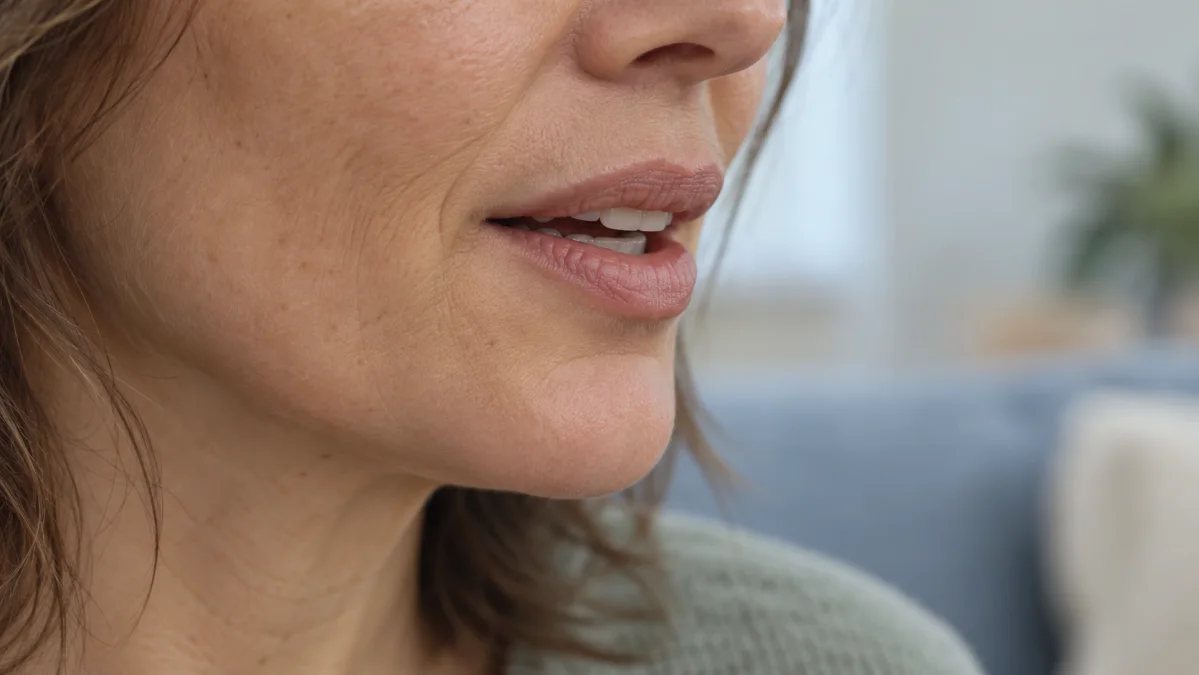
A lip concern seen at rest may not be the same concern you notice while talking. Keep those observations separate so a practitioner can understand your everyday experience without relying on a carefully posed photograph.
Record the context, not a home test
Describe one comfortable resting moment and one ordinary activity, such as speaking or smiling. You might notice an outline in a mirror but have a different question about how your mouth moves. There is no need to force a smile, hold the lips in an unfamiliar position or repeatedly check yourself.
Explain whether the concern is longstanding or new and whether previous cosmetic or dental care is relevant. Report discomfort, difficulty with normal function or changed sensation as symptoms, not as another appearance preference. An examination, rather than your notes alone, should guide the explanation.
Identify what you know first-hand
Core Aesthetics’ Carnegie lip guide considers relationships around the lips; its Murrumbeena guide describes assessment at rest and in movement. The Glen Huntly preparation page distinguishes personal observations from remembered images or borrowed claims. All refer to its Oakleigh clinic.
Use that distinction in your own brief: ‘I notice this during speech’ is first-hand; ‘a video said this means I need a procedure’ is somebody else’s interpretation. Ask the practitioner which details require examination and what records would reduce uncertainty.
| Context | My note |
|---|---|
| Comfortable rest | What I see without posing |
| Ordinary speech or smile | What changes during daily activity |
| History | When I noticed it and relevant previous care |
| Uncertainty | What I want examined rather than guessed |
Questions readers ask
Should I bring a video of myself talking?
Only if the clinic says it would be useful and explains a secure way to share it. The appointment can include direct assessment; you do not need to produce a demonstration in advance.
What if the two observations seem unrelated?
Say so. Keeping them separate helps the practitioner explain whether there is a relationship rather than encouraging you to invent one.