
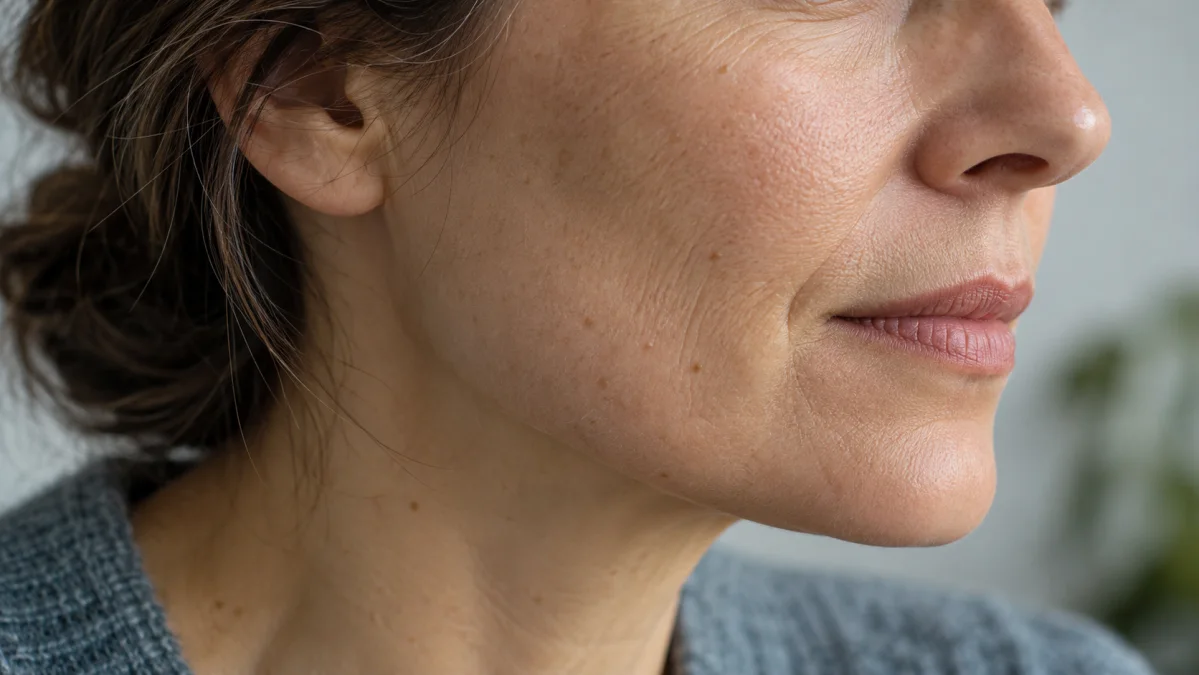
A shadow can prompt a question about facial change, but it cannot establish that tissue has been lost or identify a suitable clinical option. Treat a photograph as something to explain, not as a prescription for adding volume.
Separate the image from the inference
Notice the difference between ‘there is a dark area in this photograph’ and ‘this area needs more volume’. The first describes evidence you can show. The second assumes a cause and a response before examination. Tell the practitioner how often you notice it and whether light, angle or movement changes the impression.
You do not need to take repeated comparison images to settle the question yourself. A direct assessment and relevant history are more useful than an increasingly precise online label. Mention any associated symptoms or recent care separately.
Ask about reasoning before products
Core Aesthetics’ Burwood East guide separates surface, shadow, contour and movement. Its Burwood article considers transitions between features. The clinic’s private product-question guide explains the kinds of questions to raise if an option is proposed, rather than offering a public product selector.
Ask what the assessment found, why a proposal fits that finding and what it cannot change. Any product-specific discussion belongs with the treating clinician, including risks, alternatives and documentation. A descriptive word such as hollow should not skip those steps.
| Statement | What remains unanswered |
|---|---|
| I see a shadow | Its cause and clinical significance |
| It changes with light | What direct assessment adds |
| Someone called it volume loss | Whether that label applies to me |
| A product was proposed | Purpose, suitability, risks and alternatives |
Questions readers ask
Can an online face analysis confirm volume loss?
It cannot replace an individual clinical assessment or establish a suitable option. Keep its interpretation separate from your own observation.
Should I choose a product before consultation?
No product choice is needed to explain a concern. Ask the treating clinician about any proposed option only after assessment and a discussion of risks and alternatives.