
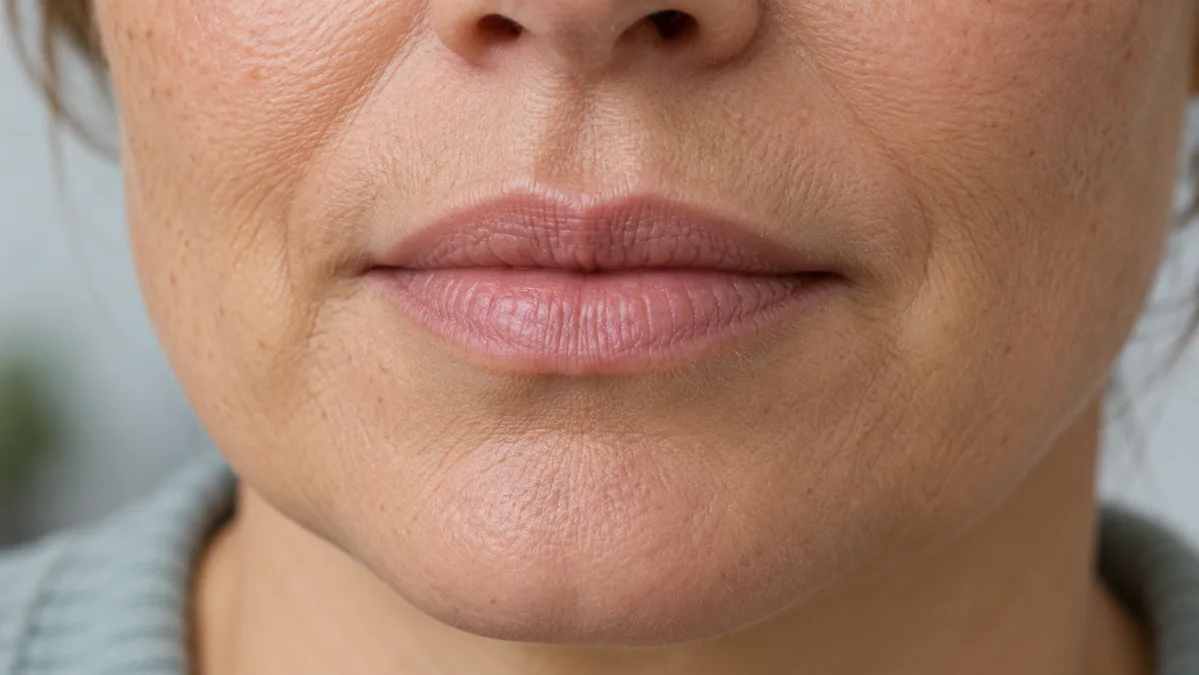
‘My lips look different’ can mean several things: the edge seems less distinct, the visible lip looks different in colour, or the shape changes during speech. Naming your observation helps an appointment start with your question rather than an assumed procedure.
Use ordinary words precisely
You do not need anatomical terminology. Say where you notice the difference and whether it is visible at comfortable rest, with makeup or only in a smile. Separate what you see from what you feel, such as discomfort or a change in sensation, because those details can lead to different assessment questions.
If your concern came from an old photograph, note its approximate date rather than trying to calculate how much has changed. Lighting, expression and the circumstances of the image need context; a comparison does not establish a cause or a treatment requirement.
Read beyond the label
Core Aesthetics’ article on why lips may look thinner with age is a clinic explanation of questions raised during assessment. Its upper-lip guide for men and lip consultation questions discuss proportion, movement and history. A gendered article title should not substitute for an individual assessment.
At the visit, ask the practitioner to repeat your concern in their own words before discussing options. If their explanation does not match what you meant, correct it. The point is a shared understanding of the question, including the possibility that no cosmetic intervention is appropriate.
| What I mean | How I could describe it |
|---|---|
| Outline | The edge is what I am noticing |
| Visible lip | The coloured part looks different to me |
| Movement | I notice it when speaking or smiling |
| Sensation | There is a feeling or symptom as well as an appearance concern |
Questions readers ask
Do I need to ask for more volume?
No. That phrase assumes a particular explanation. Describe the concern and ask what assessment shows before discussing whether any option is suitable.
Can a consultation explain a new colour change?
Tell a healthcare professional about a new or concerning change rather than assuming it is cosmetic. A website cannot determine its cause or the right care pathway.